

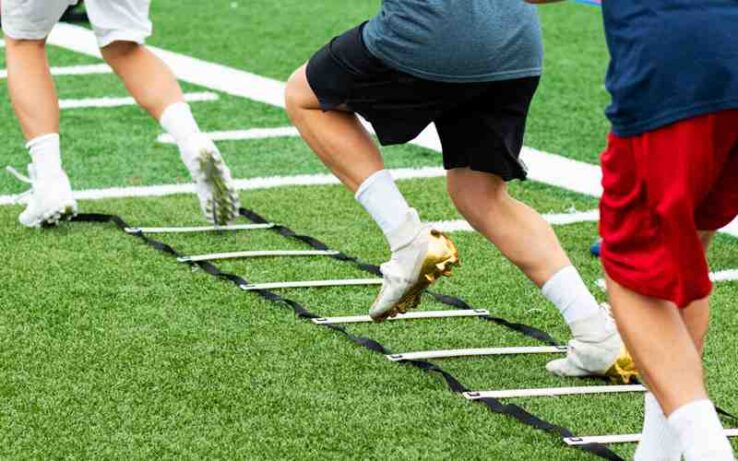
A quick first step can change a basketball possession, break a tackle, or create space on the soccer field. For high school and college athletes, speed matters, but so does the ability to produce force quickly.
Making your team more athletically explosive takes more than adding weight to the bar or running extra laps. Coaches must combine strength, jumping, sprinting, and recovery in a program that matches their athletes' experience.
Understand What Explosive Movement Requires
Explosiveness describes how rapidly an athlete can produce force. Strength provides the foundation, but applying that strength quickly determines how effectively it transfers to a jump or sprint.
A strong athlete may still struggle with acceleration if they cannot generate force fast enough. Likewise, someone with excellent straight-line speed may need more control when landing or changing direction.
Match Training to the Sport
Basketball players need powerful jumps and quick cuts. Football players rely on short bursts of acceleration and forceful contact. Soccer athletes frequently accelerate, brake, and change direction.
These movements overlap, yet the demands differ. Coaches should identify which actions appear most frequently in competition and build training around those needs.
Develop Strength Before Adding Complexity
Resistance training strengthens the muscles responsible for force production. It also creates a foundation for more demanding explosive exercises.
Prioritize Reliable Movement Patterns
Squats build lower-body strength, while deadlift variations challenge the hips and posterior chain. Lunges and split squats prepare athletes to produce force from staggered or single-leg positions.
Choose loads that allow athletes to maintain stable posture and controlled movement. A younger player who is still mastering a squat benefits more from consistent technique than from chasing a heavier number.
Add Power-Focused Exercises
Once athletes establish sound mechanics, introduce movements that emphasize speed as well as force.
Medicine ball chest passes and rotational throws let athletes practice rapid upper-body movements. Lightly loaded jump squats can build lower-body power when athletes land safely and maintain control.
Technical lifts, such as Olympic lifting variations, require experienced instruction. They are options, not necessities.
Use Plyometrics To Train Quick Force Production
Plyometric exercises challenge athletes to absorb force and immediately produce it again. That ability supports jumping, sprinting, and responsive movement during games.
Begin With Controlled Jumps
Start with simple squat jumps and standing broad jumps. The first develops upward propulsion; the second emphasizes horizontal distance.
Ask athletes to land quietly with balanced hips, knees, and ankles. When they can repeat those movements with control, introduce low lateral hops or short bounding drills.
Progress Only When Quality Holds
Hurdle hops and repeated bounds place greater demands on the body. Depth jumps demand even more preparation and are best for athletes who already demonstrate adequate strength and landing skill.
Keep sets short enough to preserve explosive effort. If jump height declines or landings become unstable, reduce the difficulty or end the drill. More repetitions do not automatically create better results.
Use Sled Training To Build Driving Power
Sled training is another way to develop more explosive athletes. Sleds challenge athletes to push against resistance while moving forward. They can help develop the coordinated leg drive involved in acceleration, especially when coaches select loads that preserve purposeful movement.
Keep Sled Pushes Short and Controlled
Begin with brief pushes across a consistent surface. Athletes should maintain a stable torso and drive forcefully through each step rather than simply struggling to move a heavy load.
Resistance changes the training effect. Heavy pushes emphasize force, while lighter resistance allows greater movement speed. Coaches should choose a load according to the intended emphasis and avoid treating every set as a maximal effort.
Pair Resistance With Free Sprinting
Sled work does not replace unresisted sprints. Athletes also need opportunities to practice acceleration without more resistance.
Schedule short sprints when players are relatively fresh. Allow enough rest to maintain speed and technique, then adjust volume based on the demands of practice and competition.
Improve Acceleration and Change of Direction
You can’t make your team more athletically explosive without addressing acceleration and change of direction. Power means little if athletes cannot apply it to the movement patterns their sports require.
Practice the First Few Steps
Use short sprints of 10 to 20 meters to develop acceleration. Encourage strong arm action and purposeful ground contact without overwhelming athletes with technical instructions.
Time a few repetitions under consistent conditions, but avoid turning speed work into a conditioning test.
Teach Braking Before Cutting Faster
Changing direction requires decelerating under control before accelerating. Start with simple drills in which athletes sprint, slow down, and redirect their bodies.
Shuttle runs and planned cutting exercises create opportunities to practice stable foot placement and body positioning. Later, introduce partner cues that require athletes to react to an unexpected direction.
Emphasize control before increasing speed. Better braking mechanics can make fast directional changes more effective and manageable.
Organize Sessions To Protect Performance
A useful program balances demanding exercises with adequate recovery. Stacking intense sessions without considering games, school schedules, and individual fitness can undermine progress.
Put Explosive Work Early
Begin sessions with a dynamic warm-up, including controlled movement drills that prepare athletes for faster actions.
Place high-quality jumps and short sprints near the beginning of training, before athletes accumulate substantial fatigue. Strength exercises can follow when appropriate. Save exhausting conditioning for a separate segment or day so it does not interfere with power technique.
Adjust the Workload Across the Season
The off-season provides room for gradual increases in strength and training demands. During competition, practices and games already create significant physical stress. Coaches should reduce lifting and jumping volume while preserving some high-quality explosive efforts.
Sleep, nutrition, hydration, and rest between demanding sessions support adaptation. Student-athletes also manage classes and exams, which can affect their readiness.
Encourage players to report persistent soreness or unusual fatigue. Anyone returning from injury should follow guidance from qualified healthcare professionals before resuming intense drills.
Measure Improvement With Simple Tests
Coaches do not need elaborate equipment to track progress. They need reliable methods and consistent conditions.
Choose Tests That Reflect Team Needs
Vertical jumps provide a snapshot of upward power. Standing broad jumps assess horizontal jumping performance, while timed short sprints help monitor acceleration.
Use the same warm-up, testing surface, and measurement method whenever possible. Review results over multiple weeks rather than interpreting a single poor performance as a setback.
Compare Athletes With Their Own Baselines
A first-year high school athlete and an experienced college player will not respond identically to the same workload. Training history, maturation, and recovery differ.
Use individual starting points to evaluate progress and adjust exercises. Coaches can celebrate team improvement without expecting every player to reach identical numbers.
Build Power Through Consistency
Improving explosiveness is a long-term process. Strength work develops force capacity, while jumps and sprints help athletes apply it quickly. Sled training provides another way to practice resisted movement.
The best program is one athletes can perform safely and consistently. By choosing appropriate exercises, protecting recovery, and measuring progress, coaches can help their teams become quicker and more powerful throughout the season.
Image Credentials: By coachwood, #296610476

Comments