

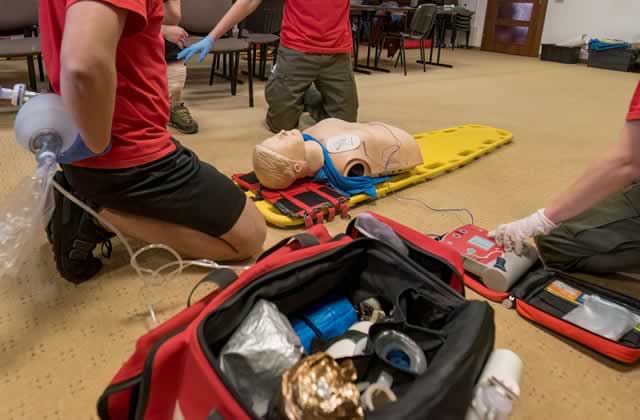
Cardiopulmonary resuscitation (CPR) is a life-saving method used in a variety of emergencies, particularly when a person experiences cardiac arrest or stops breathing.
Knowing which professions need CPR certification will enable people to choose whether getting certified is a wise investment for their future work.
This article will look at several professions requiring CPR certification, stressing why this ability is so important and how it relates across many sectors.
Healthcare Professionals
The requirement for CPR certification among healthcare professionals, including physicians, nurses, and paramedics, is not surprising. Many times, these people are under great strain and quick response could make all the difference between life and death.
Patients who might go into cardiac arrest or have respiratory failure abound in hospitals, clinics, and emergency medical services (EMS) facilities. In these cases, one of the first crucial actions in stabilizing the patient before more advanced treatment can be started is CPR.
Maintaining a CPR certification ensures that professionals in the healthcare sector have current skills and are prepared to act quickly in an emergency.
Teachers and Educators
Teachers and educators must ensure their pupils’ safety and well-being both within and outside of the classroom. Unexpected medical crises can occur anywhere, including schools, daycares, summer camps, and other settings.
Young children, in particular, are more prone to mishaps and injuries that could result in cardiac arrest or pulmonary problems. Many educational contexts require CPR training for staff personnel in order to respond correctly during an emergency.
Furthermore, teachers who work with children or adults with special needs can be required to be CPR certified in order to provide a safe environment for their students.
Lifeguards and Swimming Instructors
One of the most often occurring professional groups that need to be CPR certified is lifeguards. Lifeguard training prepares them to react fast to aquatic crises, including drowning or near-drowning events, whether they be working at pools, beaches, or other water venues.
For lifeguards, CPR is a vital ability since it can help someone who has stopped breathing or whose heart has stopped beating. Swimming instructors frequently have CPR certification since they engage closely with individuals in the water and must be prepared for potential catastrophes.
You can simply get your CPR renewal from a reputable source, which is critical to ensuring that your training remains current and effective in saving lives.
Childcare Providers
Childcare personnel, such as nannies, babysitters, and daycare staff, must be trained in CPR in order to respond to medical crises that can occur while caring for children. Children are especially prone to mishaps and injuries; hence, while performing CPR, their tiny bodies sometimes need specific approaches.
Trained to identify the symptoms of choking, allergic reactions, and other life-threatening illnesses, childcare professionals Many times, persons working in childcare environments must have CPR certifications, especially for child and baby CPR.
Construction Workers and Occupational Safety Professionals
Workers in high-risk sectors, including construction, run a range of safety risks that could cause mishaps or injuries requiring CPR. Unexpected medical events can result from falling trash, electrical shocks, and other building-related events.
To offer quick aid in case of an emergency, occupational safety experts, as well as individuals in supervising or safety roles on building sites, are often obliged to get CPR certification. These experts can help injured workers stabilize by learning CPR, therefore enabling emergency medical personnel to get on location.
Mental Health Professionals
Mental health professionals, such as psychologists, therapists, and counselors, cannot immediately come to mind when considering jobs that require CPR certification. Still, they frequently work with people who are at risk of self-harm or suicidal ideation.
Sometimes, these people try to hurt themselves, which might cause circumstances requiring CPR to save their lives. Although CPR is not directly connected to the mental health issues under treatment, for professionals in the field, it is a vital ability in case of an emergency.
Conclusion
CPR certification covers a broad spectrum of professions in several sectors, not only among medical experts. From teachers and daycare providers to lifeguards, construction workers, and mental health professionals, CPR is a vital ability that can make all the difference between life and death in an emergency.
CPR can save lives whether the situation calls for handling a drowning accident, a heart arrest, or an occupational injury. Those working in fields where CPR is needed must keep updated by means of consistent renewals.
This guarantees that people have the most modern skills and are ready to act fast in an emergency, thereby helping to create safer workplaces and communities.
Image Credit: require a CPR certification by envato.com
end of post … please share it!
| envato.com |
PDF: moving to college checklist



Comments