

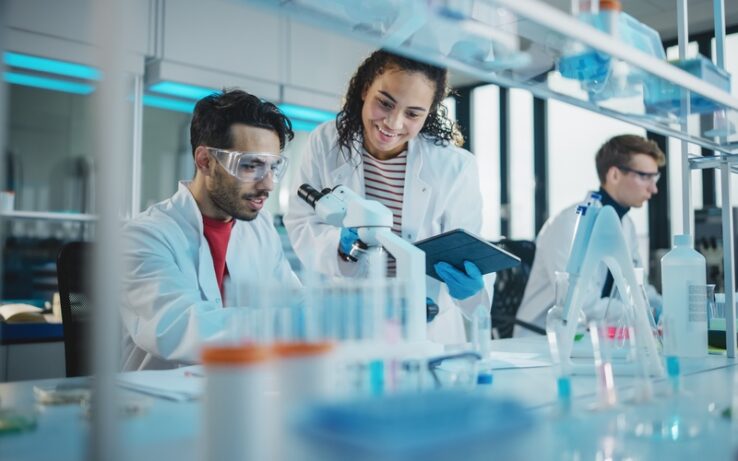
Landing a spot in a research lab is exciting. It allows you to move beyond textbook theory and apply concepts to real-world problems.
Whether you are aiming for graduate school or preparing for a career in industry, undergraduate research builds critical skills.
However, the environment differs significantly from standard classroom labs. Knowing what to expect in a college research lab helps you transition smoothly and make the most of the opportunity.
The Environment and Culture
Research labs operate differently than teaching labs. In a teaching lab, instructors set up experiments with known outcomes to demonstrate specific concepts. In a research lab, the answers are unknown. You work on questions that no one has solved yet. This shift requires patience and resilience.
Independence and Responsibility
You will likely have more freedom than in a classroom setting. While a principal investigator (PI), postdoc, or graduate student will mentor you, they expect you to take ownership of your project. This means managing your time, reading relevant literature, and troubleshooting problems before asking for help. You become responsible for your data, your schedule, and the equipment you use.
Collaboration and Teamwork
Science is rarely a solo endeavor. You will work alongside people with different levels of experience. Weekly lab meetings are common, where team members present data, discuss challenges, and critique each other’s work. These meetings provide a safe space to practice scientific communication and learn from peers.
Daily Tasks and Procedures
Your daily routine depends on your discipline, but certain elements remain consistent across most fields. You will spend significant time mastering techniques and protocols. Accuracy is paramount. Unlike a classroom lab, where “close enough” might get you a passing grade, research demands precision to ensure reproducibility.
Mastering Techniques
Expect to spend your first few weeks or months learning the basics. You might shadow a mentor to learn how to use specific instruments or software. Learning the proper way to handle equipment is crucial. For example, mishandling delicate tools can cause delays and ruin experiments.
Data Collection and Analysis
Once you master the techniques, you will focus on generating data. This involves running experiments, recording observations in a lab notebook, and analyzing results. Documentation must be meticulous.
If you cannot prove what you did, the data is useless. You will likely use statistical software or coding languages to interpret your findings.
Challenges and Growth
Research rarely goes according to plan. Experiments fail, equipment breaks, and hypotheses turn out to be wrong. This result is a regular part of the scientific process. Learning to handle failure without getting discouraged is one of the most valuable skills you will gain.
Critical Thinking
You will learn to think like a scientist by questioning assumptions, designing controls, and interpreting ambiguous data. You stop looking for the “right” answer and start looking for what the evidence suggests.
Professional Development
Beyond technical skills, you gain professional experience. You might present posters at conferences, co-author papers, or apply for grants. These experiences strengthen your resume and provide talking points for future interviews.
Knowing what to expect in a college research lab prepares you for the rigor and rewards of scientific inquiry. It is hard work, but the experience offers unparalleled growth and insight into your future career.
Image Credentials: By Gorodenkoff, 415825505
end of post … please share it!
| envato.com |
private student loans: when you need a little extra to pay for college


Comments