

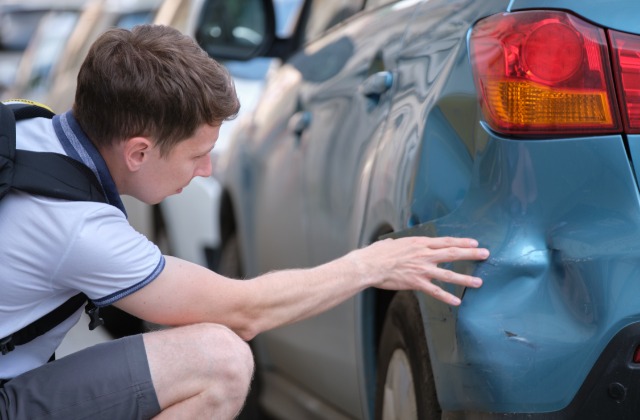
You’re walking back from class and spot a fresh scratch or dent. Don’t panic. Follow this quick checklist to handle parking lot damage efficiently.
The next 10 minutes can make the difference between a smooth resolution and a costly headache.
Take a Quick Look Around Before You Move
Scan the area for paint transfer on the ground, broken plastic, or a nearby car with matching marks. If there are cameras, note the closest landmark (building entrance, light pole number, or lot sign) and contact someone on campus to review the camera footage. If you see the other driver, keep it calm and stay in public view.
Document the Damage
Your phone is your best tool. Aim for clear proof you can use later.
Take Photos in This Order
Start wide, then go close. You want to show your car in the parking spot, the damage from a few angles, and tight shots of dents, cracks, or paint transfer. If a piece from your car is hanging off, photograph it before you tuck it somewhere safe.
Jot Down the Basics
In your notes app, write the date/time, lot name, and the nearest landmark. Add one line about what you noticed first.
Do a Fast Safety Check
Most parking-lot damage is cosmetic, but you don’t want to keep driving if something shifted.
Try a Quick “Control Check”
With the car still parked, turn the wheel gently left and right. Listen for clicking and notice if it suddenly feels loose, sticky, or unusually stiff. Even if the damage looks cosmetic, any new looseness, sticking, or clicking at the wheel can signal bigger issues.
If anything feels off, keep the drive short and cautious, or get help instead of heading straight onto a busy road.
Decide Who To Contact
What you do next depends on where you parked and how serious the damage is.
On Campus
For more than a tiny scuff, report it to campus security or the parking office. Ask whether an incident report is available and where cameras usually cover. If the other driver is present, exchange names, plate numbers, and insurance details.
Off Campus
Ask the property or store about cameras and how long the footage is kept. If it looks like a hit-and-run, a non-emergency police report may help, depending on local rules.
Make a Repair Plan
If the damage affects visibility (lights, mirrors) or leaves sharp edges around the car, prioritize it. Otherwise, get an estimate when you can and keep your photos, notes, and any report numbers in one folder.
Prevent a Repeat
You can’t control other drivers, but you can stack the odds in your favor with smarter parking choices.
- Pick a well-lit area.
- Avoid tight corners in crowded lots.
- Park where you can open your doors without squeezing.
A few seconds of strategy now beats another round of photos and phone calls later. Keep this parking lot damage checklist handy. Screenshot it, bookmark it, or just remember the steps. When something happens (and in college lots, it probably will), you’ll know exactly what to do.
Image Credentials: bilanol, 480523361
end of post … please share it!
| envato.com |
private student loans: when you need a little extra to pay for college


Comments