

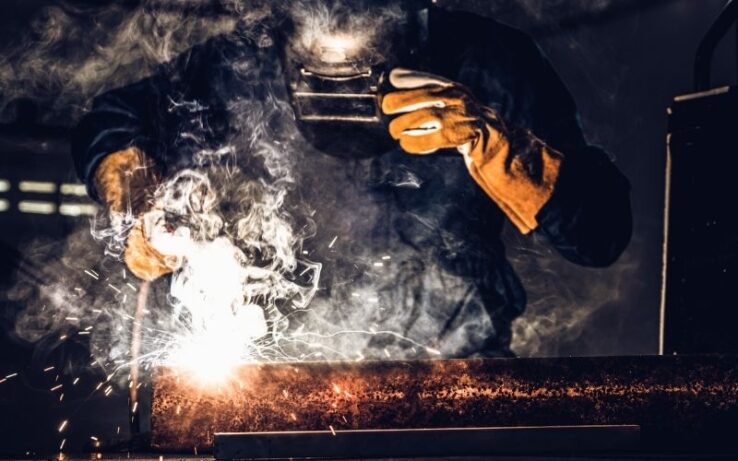
High school graduation may be upon you, and you should be thinking about what you want to do with your future.
Heading off to a traditional college may not excite you; if that’s the case, look into trade schools that offer valuable skills for blue-collar jobs.
Thinking about welding? Keep reading for what you need to know before going into welding as a career.
What Is a Welder?
A welder is a professional-trained individual who uses heat and friction to join different types of metal to build or repair products and goods. Welders are vital components in the infrastructure, manufacturing, and fabrication industry.
What Are the Responsibilities of a Welder?
As a welder, you can expect to follow safety regulations. You’ll also need knowledge of common welding dangers so that you can avoid them on the job.
You will be completing projects and making sure they are durable and up to the company standard. A welder might also view blueprints to determine the dimensions of the products they’ll be creating.
Are There Different Types of Welding?
There are many different welding experiences to try. If you are someone who likes to travel, some jobs, like pipeline installation, shipbuilding, military support, underwater welding, etc., give you that opportunity. Some of the more common welding applications are listed below.
- Stick Welding
- MIG Welding
- TIG Welding
- Hyperbaric Welding
What Are the Welding Careers?
The opportunities for a career are endless for welders. Depending on the setting, you could work on construction sites, in factories, on an oil rig, or out on the railroad.
There is bound to be an industry that catches your attention the most, and if you don’t like one way of doing welding, you can always try different job opportunities.
What Does the Salary Look Like?
According to the US Bureau of Labor Statistics, in 2020, the average welder made roughly $44,190 a year, or $21.25 an hour.
The job outlook for the next eight years for welders will be up 8 percent. The salary can vary by state, certification, and type of welding career.
Do You Need an Education?
Just about anyone who has the determination can do welding, and you don’t technically need a college degree for it. However, if you want the higher end of the company’s salary, we recommend fulfilling a welding certificate at a trade school, which can take up to six months to complete. Of course, if money is not something you care about, there are plenty of successful amateur welders in the industry.
Other Key Aspects To Keep in Mind
Welders can work irregular hours or even longer hours than the average workweek. Enrolling in a trade school gives you a hands-on experience that can propel you forward in your welding career. You might also work in tight spaces, near high temperatures, and risk exposure to harmful fumes.
Now that you have everything you need to know before going into welding as a career, do you think you have what it takes? A little bit of determination, hard work, and strong attention to detail will leave you well on the path to starting a welding career. If going to a four-year college is not for you, consider going to a trade school and learning how to weld for a living.
Image Credit: What You Need To Know Before Going Into Welding as a Career by Adobe Stock royalty-free image #337896754
end of post … please share it!
SHOP: finding the perfect bedframe


Comments